Airbnb quietly added coworking to its platform this month. As part of Airbnb Services, travelers in London can now book day passes and meeting rooms at real coworking spaces, with UK operators Oneder and Work.Life among the first to list. It is a limited test for now, but the direction is clear: the biggest travel marketplace in the world thinks flexible workspace belongs next to lodging, airport pickups, and car rentals.
If you run a coworking space, this is good news. A whole population of remote workers, business travelers, and workation types who never search for "coworking near me" will now stumble onto day passes while booking a place to stay. That is incremental revenue for desks that would otherwise sit empty on a Tuesday afternoon - and you do not have to build the demand yourself. But it changes something operators rarely think about until it bites: who is on your network.
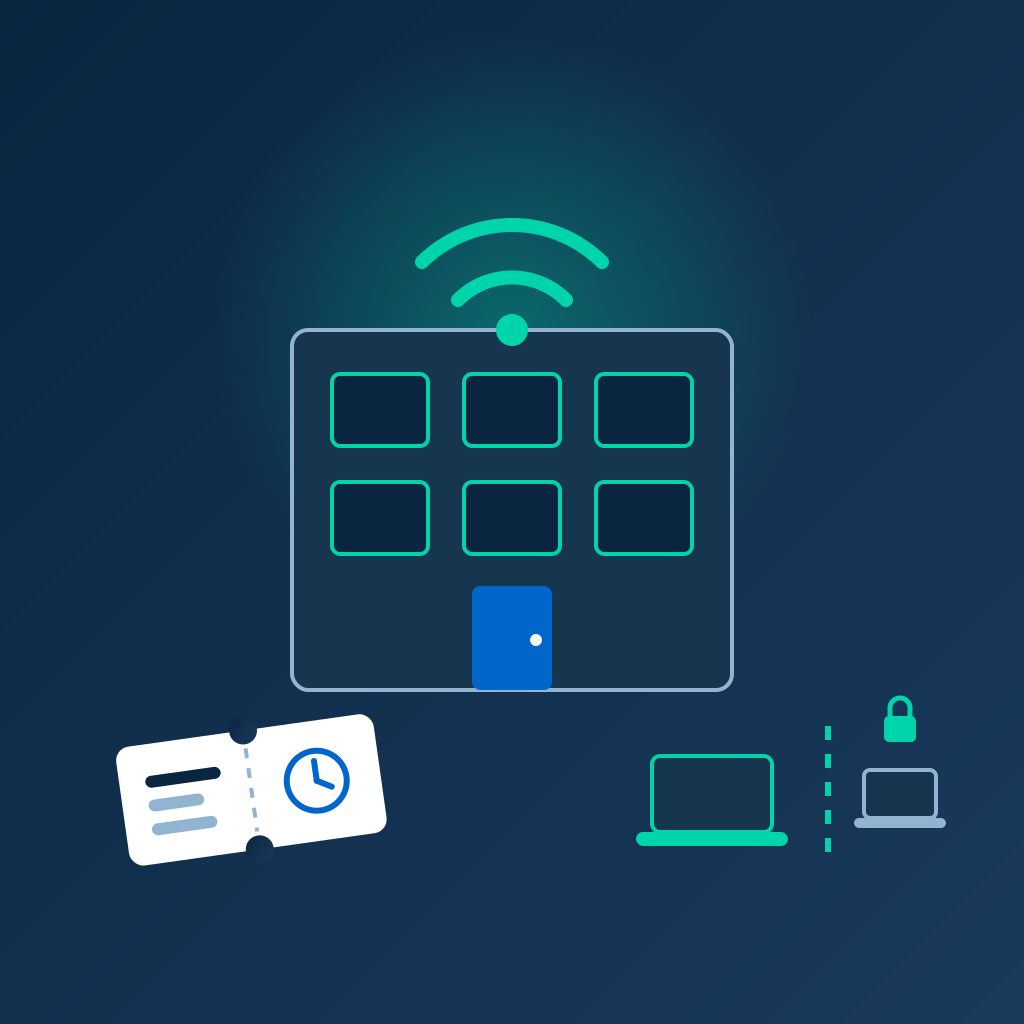
Your WiFi Was Designed for People You Know
Most coworking networks are built around members. Someone tours the space, signs up, gets onboarded, and somewhere in that process they get the WiFi password. The network implicitly trusts them because your team implicitly vetted them.
Day-pass marketplaces break that assumption. A visitor who booked through Airbnb an hour ago walks in and needs to be online in minutes. Nobody on your team has met them before, and they may never come back. Multiply that by every booking platform that follows Airbnb into this market, and the shared WiFi password taped to the front desk becomes the weakest part of your operation:
- One password, hundreds of strangers. Once a drop-in has your member password, they have it forever - from anywhere in range, along with anyone they share it with
- No way to tell who did what. If someone on your network does something abusive or illegal, a shared credential makes every user look identical
- Members and visitors mixed together. The laptops, NAS drives, and printers your members leave connected are one subnet away from whoever walked in today
- Front-desk friction. Manually handing out codes works at five visitors a week. It stops working when a marketplace starts sending you five a day
This Is Not a Reason to Stay Off Booking Platforms
Marketplace demand is a gift - it fills desks you already pay rent on. The fix is not avoiding drop-in traffic; it is treating drop-in access as its own thing instead of a hole punched in your member network.
What Drop-In-Ready WiFi Looks Like
The checklist is short, and most of it is configuration rather than new hardware.
Every Visitor Gets Their Own Credentials
A day-pass guest signs in through a branded captive portal on their own device and gets access that belongs to them alone. No shared password, nothing for your team to hand out, and a clean record of who was online - which also makes the accountability question above answerable.
Access Expires With the Pass
A day pass should mean a day of WiFi. Time-limited guest access ends on its own, so yesterday's visitors are not quietly reconnecting from the coffee shop next door.
Visitors Stay Off the Member Network
Guest traffic is isolated from member devices and your back-office gear - separate SSIDs or dynamic VLAN assignment, enforced at the access point. A drop-in can reach the internet at full speed and nothing else.
WiFi Follows Your Booking System
If you manage day passes in a platform like Nexudus, OfficeRnD, Cobot, or DeskWorks, WiFi should follow the booking automatically: access appears when the pass starts and disappears when it ends, with no manual guest lists in between. IronWiFi's coworking integrations feed member and guest check-ins straight from your management platform.
Members Get Something Better Than a Password
The flip side of separating guests is upgrading members: a secure SSID with per-member credentials or certificates, or Passpoint profiles that reconnect members automatically across every location. Listing your space publicly should never put the people who pay you monthly at risk.
Ready for the Drop-In Era?
IronWiFi gives coworking spaces per-visitor guest access, automatic expiry, member isolation, and native Nexudus, OfficeRnD, Cobot, and DeskWorks integrations - on the access points you already own, priced per location with unlimited members and guests.
Start Free Trial Explore Coworking WiFiConclusion
Booking marketplaces entering coworking is the market telling operators that flexible demand is going mainstream. Whether Airbnb's London test expands or not, the pattern it represents - strangers discovering and booking your space through channels you do not control - is the direction the industry is moving. The spaces that win will be the ones that can say yes to every channel without adding front-desk work or network risk.
The practical next step is a ten-minute audit: does every drop-in get individual, expiring credentials, and is guest traffic isolated from your members? If both answers are yes, list your space anywhere you like. If not, that is the gap to close before the first marketplace booking walks in.

Daniel Konecny
Blog Writer, IronWiFi
Daniel writes about enterprise WiFi authentication and identity security at IronWiFi. With deep expertise in RADIUS, 802.1X, and cloud infrastructure, he covers practical network security for IT teams managing thousands of devices.
About the author